 Gary Claven
Carousel ads aren’t new. But in the last 12 months, they’ve gained fresh attention—and for good reason. Whether you’re running paid ads on Meta or building reach organically on Instagram or LinkedIn, carousels now offer structural benefits that go far beyond aesthetics.
The Instagram Advantage: What Adam Mosseri Revealed
In late 2024, Instagram’s Head, Adam Mosseri, publicly explained why carousel posts tend to reach more users than single images. His reasoning was twofold.
First, carousels naturally drive more engagement—swipes, likes, saves, and shares. That additional interaction signals to the algorithm that the post is valuable.
Second, Instagram gives carousels a second chance. If a user scrolls past your post without swiping through, the algorithm may resurface the post later, automatically starting the carousel from the second or third slide. This replay effect dramatically increases the odds of getting noticed.
In effect, one carousel can deliver multiple impressions to the same user. This is true for both organic posts and paid ads.
For marketers, this means a carousel isn’t just a richer content format—it’s also structurally favoured by the feed itself.
Carousels and the Algorithm: What’s Really Going On?
Carousels perform well because they generate multiple types of engagement signals:
- Swipes count as user interactions.
- The time someone spends swiping increases dwell time.
- Saves and shares are more common when a post delivers layered value across multiple frames.
All of these signals contribute to how the algorithm ranks content. The more people swipe, pause, or share, the more the platform learns that your content is engaging. That feedback loop gives carousels more reach than their static counterparts.
Add music or audio to your Instagram carousel, and you may even qualify for inclusion in the Reels tab—another algorithmic boost.
But What About LinkedIn?
While Adam Mosseri’s comments were about Instagram, LinkedIn behaves in a very similar way.
On LinkedIn, carousel-style posts are uploaded as multi-page PDFs. The platform treats each page swipe as a signal of engagement, and the algorithm responds accordingly. This explains why carousels and document posts consistently outperform static images or simple text updates.
Several platform analyses and experiments have shown that carousel posts on LinkedIn can generate significantly more impressions and engagement than other post types—sometimes up to two or three times more.
It’s not just the format—it’s how people engage with the content. Swiping through pages keeps users on the post longer, which improves visibility. Longer dwell time means the algorithm ranks the post higher, often pushing it into more feeds.
Why Carousels Work So Well
Here’s why carousels consistently outperform:
- Multiple Hooks Each slide is another opportunity to grab attention, clarify a message, or encourage action.
- High Engagement Density Users can swipe, save, share, or comment—all on one post. These multiple engagement signals amplify algorithmic reach.
- Longer Viewing Time People naturally spend more time on carousels than on single-image posts. This longer dwell time tells the algorithm the content is valuable.
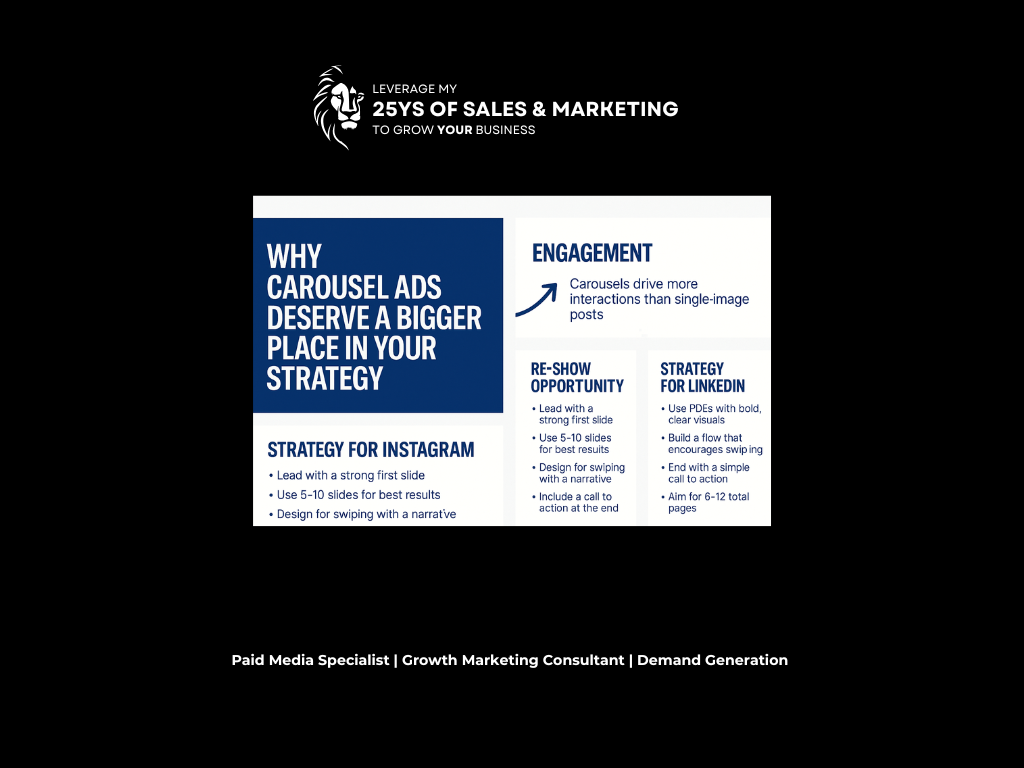
- Re-show Opportunity Platforms like Instagram will resurface carousels if users didn’t engage the first time. This creates a rare opportunity for a second impression without any extra spend or effort.
Strategy for Instagram
To get the most from carousel ads or posts on Instagram:
- Lead with a strong first slide. It must stop the scroll.
- Use 5–10 slides for best results—enough to deliver value without overwhelming.
- Design for swiping. Create a narrative or sequence.
- Include a call to action at the end.
- Use music or audio to potentially unlock extra visibility.
- Track key metrics like swipe-through rate, saves, and shares.
Strategy for LinkedIn
LinkedIn’s carousels work best when they deliver educational or strategic content in bite-sized form. Here’s how to use them effectively:
- Use PDFs with bold, clear visuals and one idea per page.
- The first page should function like a headline—promise value.
- Build a flow that encourages people to swipe.
- End with a simple call to action or question to encourage comments.
- Aim for 6–12 pages total. Short enough to finish, long enough to build engagement.
Common Myths About Carousels
Myth 1: More slides always equal better results. Reality: Quality trumps quantity. Most high-performing carousels have between 5 and 10 slides.
Myth 2: Reels outperform everything. Reality: Reels do perform well on Instagram, but carousels often outperform single images and can compete closely—especially when designed thoughtfully.
Myth 3: Carousels are outdated. Reality: Engagement data continues to show they outperform most formats on both Instagram and LinkedIn.
Real-World Results
Across both platforms, carousels regularly deliver:
- More reach per impression
- Higher engagement rates
- Increased saves and shares
- Better storytelling outcomes
In experiments run by marketing teams and social scheduling platforms, carousel formats consistently landed in the top tier of post performance.
Brands that use carousels not just to showcase products, but to teach, explain, or entertain, see some of the biggest returns.
How to Start Using Carousels Today
If you’re not using carousel posts already, now is the time. Here’s how to begin:
- Audit your existing content. Blog posts, case studies, and testimonials can all be repurposed into carousel slides.
- Choose your platform. Instagram for visual storytelling, LinkedIn for professional insights.
- Design with clarity. Each slide should communicate one idea.
- Schedule and test. Run A/B tests on first-slide headlines and length.
- Track metrics over time. Swipe-through rate and saves are key indicators of value.
Final Thoughts
Carousels aren’t just a design format—they’re a performance asset. Whether you’re running paid campaigns on Meta or building reach on LinkedIn, carousels offer structural advantages that few other formats can match.
They give your content a second chance. They drive deeper engagement. And they signal value to the algorithm in a way that single-image posts can’t replicate.
As marketers look for more efficient ways to stand out in crowded feeds, carousels deserve serious consideration—both creatively and strategically.
Now’s the time to make them part of your core content plan.


 Gary Claven